In the Serra da Bodoquena, Water Does Not Hide. It Reveals
There are places where nature reveals itself through contrast. In the Serra da Bodoquena, it reveals itself through subtraction. Filtered through limestone rocks, the water in the rivers reaches a rare level of transparency, allowing the riverbed to be seen tens of meters below. This editorial accompanies the journey into a landscape of canyons, waterfalls, and turquoise rivers, where the experience is defined by clarity.
 By Lucas Machado · August 19, 20263 min read
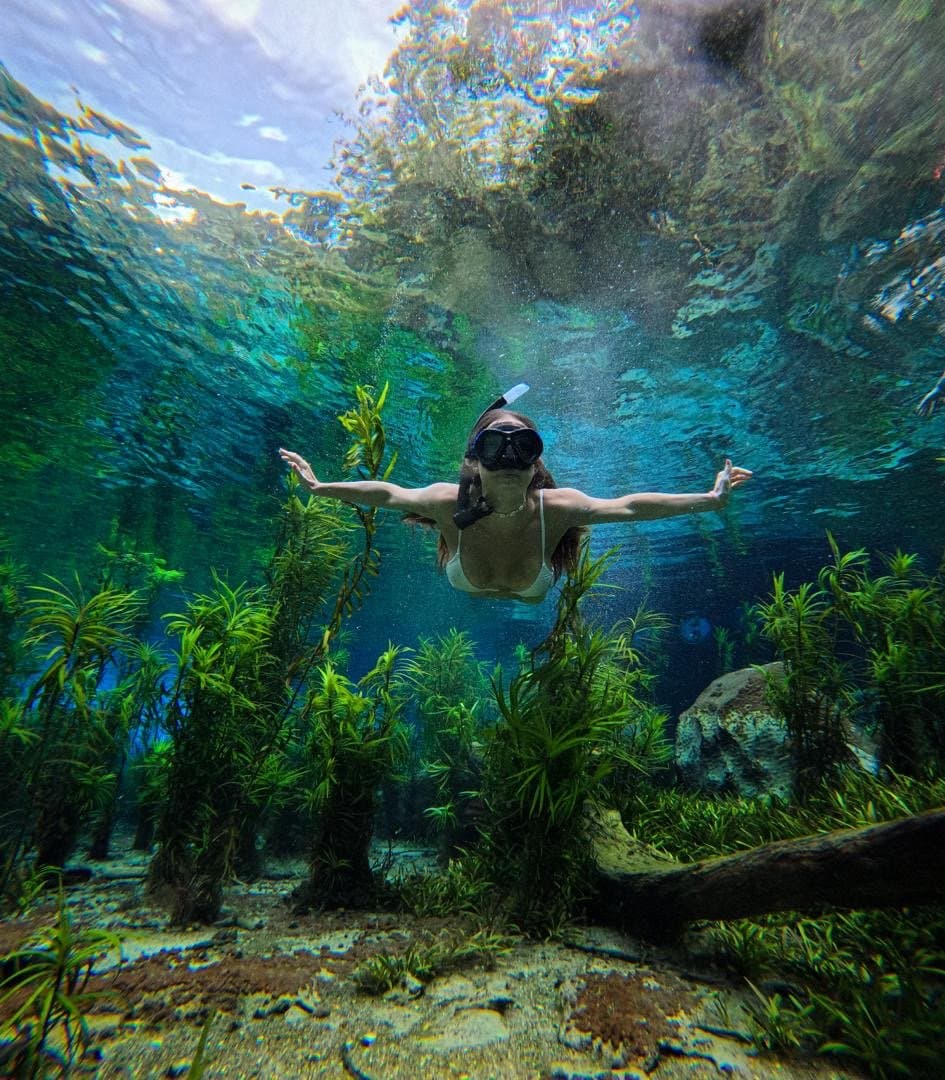
There are places where nature reveals itself through contrast—through density, volume, scale. In the Serra da Bodoquena, it reveals itself through subtraction. What remains is clarity. The water arrives filtered through limestone rocks. Passing through the massif, it loses almost all turbidity. The result is a river that seems to have no body: transparent enough to see the bottom tens of meters below, the stones, submerged roots, schools of fish moving in slow formation. There is no mist. No suspension. Just the exact measure of water over land.
Access to the mountain range is mostly made from Bonito or Bodoquena, in the southwest of Mato Grosso do Sul. The Serra da Bodoquena National Park protects about 77,000 hectares of this karst relief, where the inner Atlantic Forest still meets the Cerrado and approaches the edge of the Pantanal. It is a transitional territory and, at the same time, one of rarefaction: less noise, less excess, more precision. The experience almost always begins with entering the water.
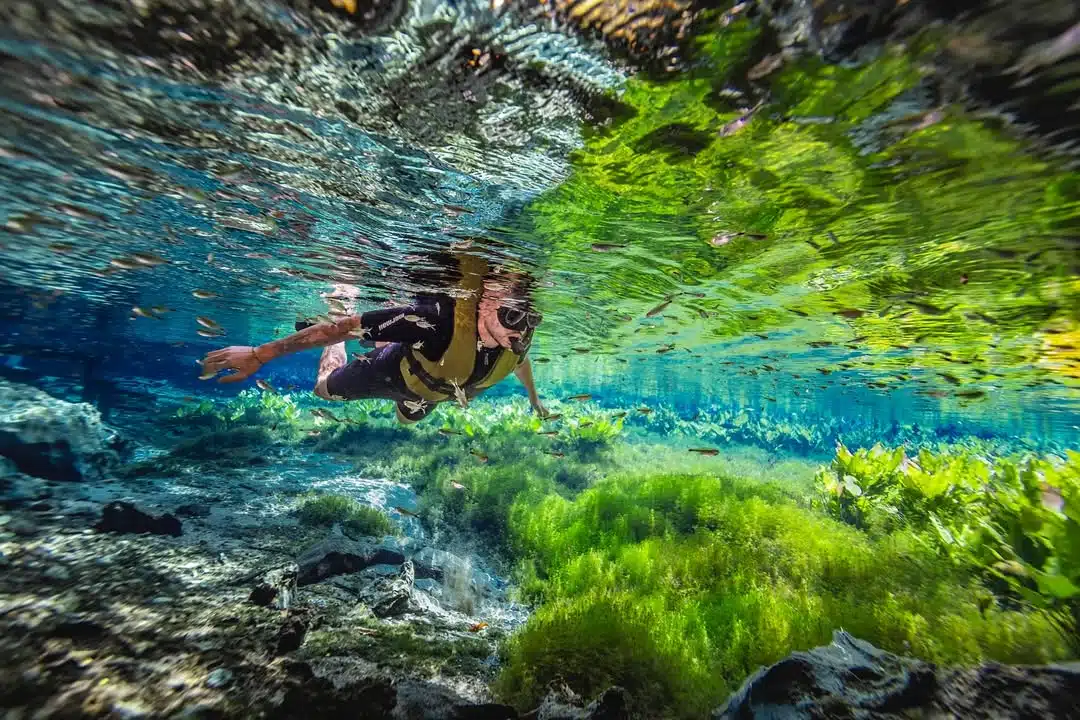
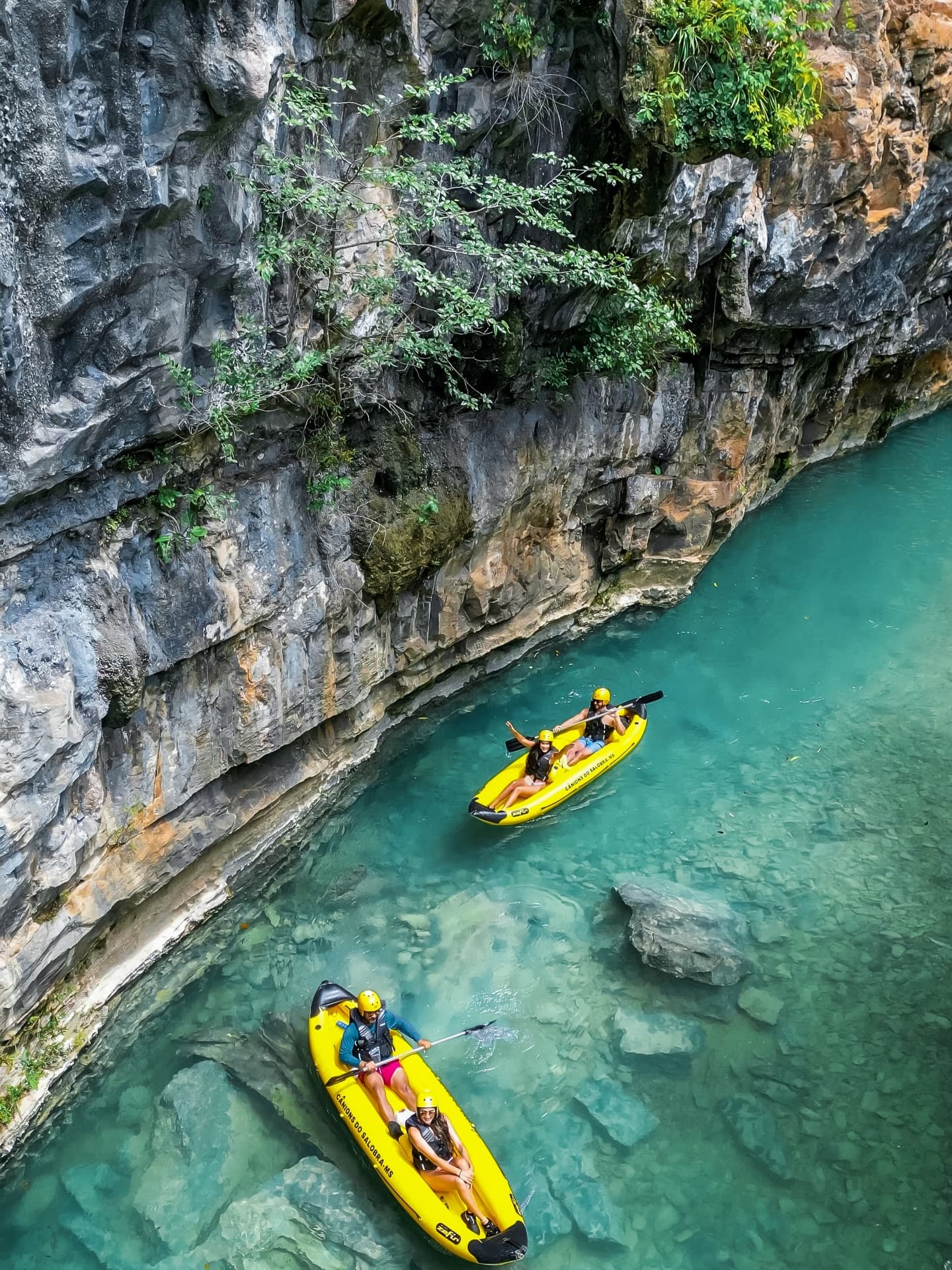
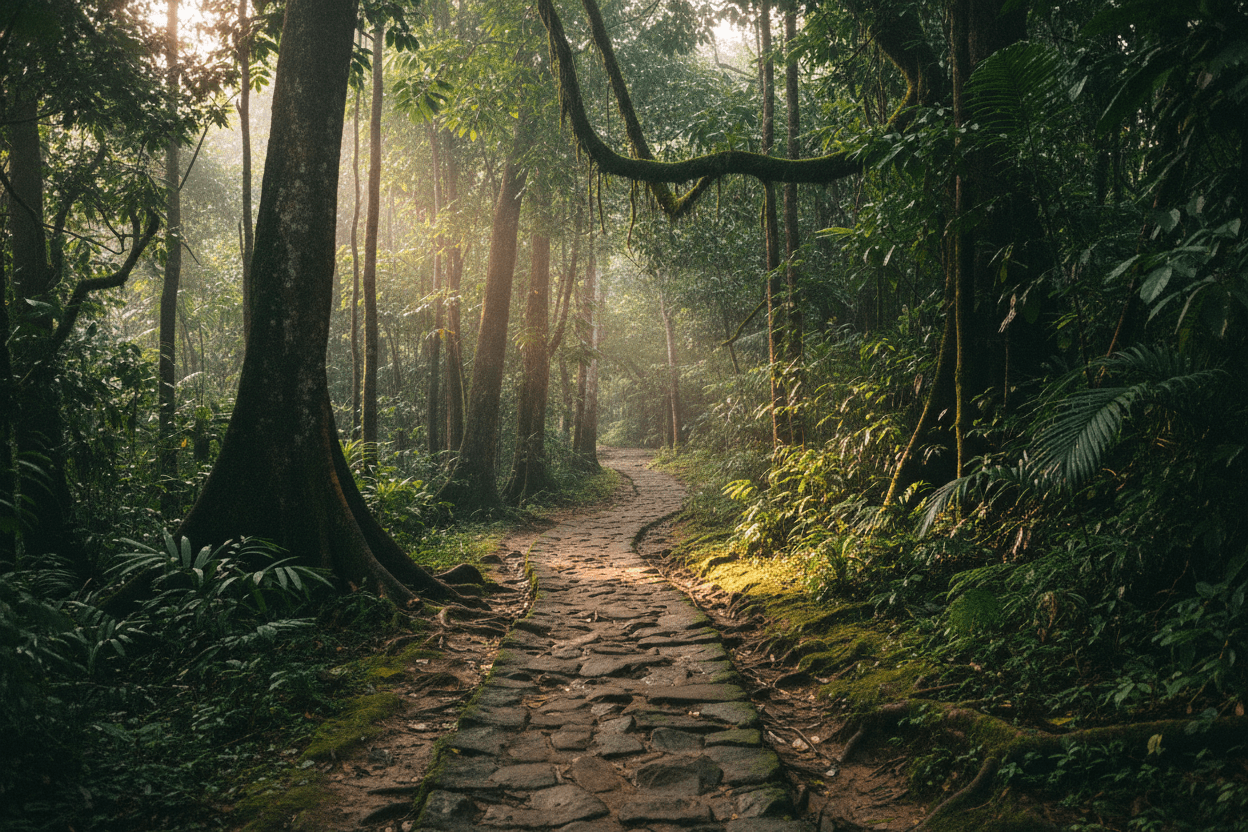
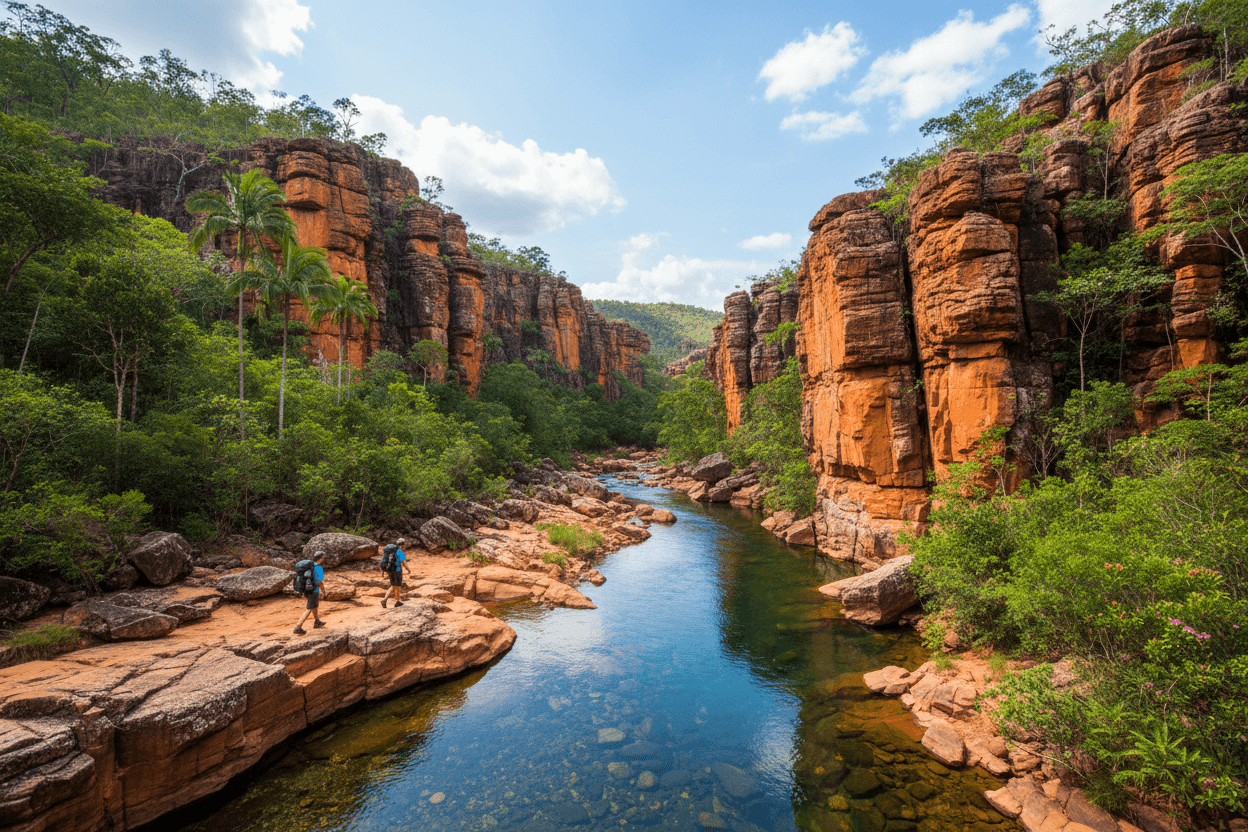
In the Rio Azul or the Salobra, the body adapts to the temperature and current. The mask goes down. Suddenly, the world above becomes secondary. Below, light passes through the column of water without resistance. Silver and gold fish—piraputangas, juvenile golden dorados—pass at close range. Aquatic plants move with the slowness of those who have never needed to hide. The riverbed seems close all the time, even as depth increases. There is a strange feeling of intimacy with something that in other rivers remains opaque. Further on, the canyon narrows. Limestone walls rise dozens of meters. The water takes on shades of turquoise green and emerald. In some sections it is possible to walk inside the river—the so-called aquatrekking—feeling the riverbed beneath the feet while the current gently pushes the body. In others, just floating is enough. The silence here is not the absence of sound. It is the replacement of human noise by the sound of water over stone.
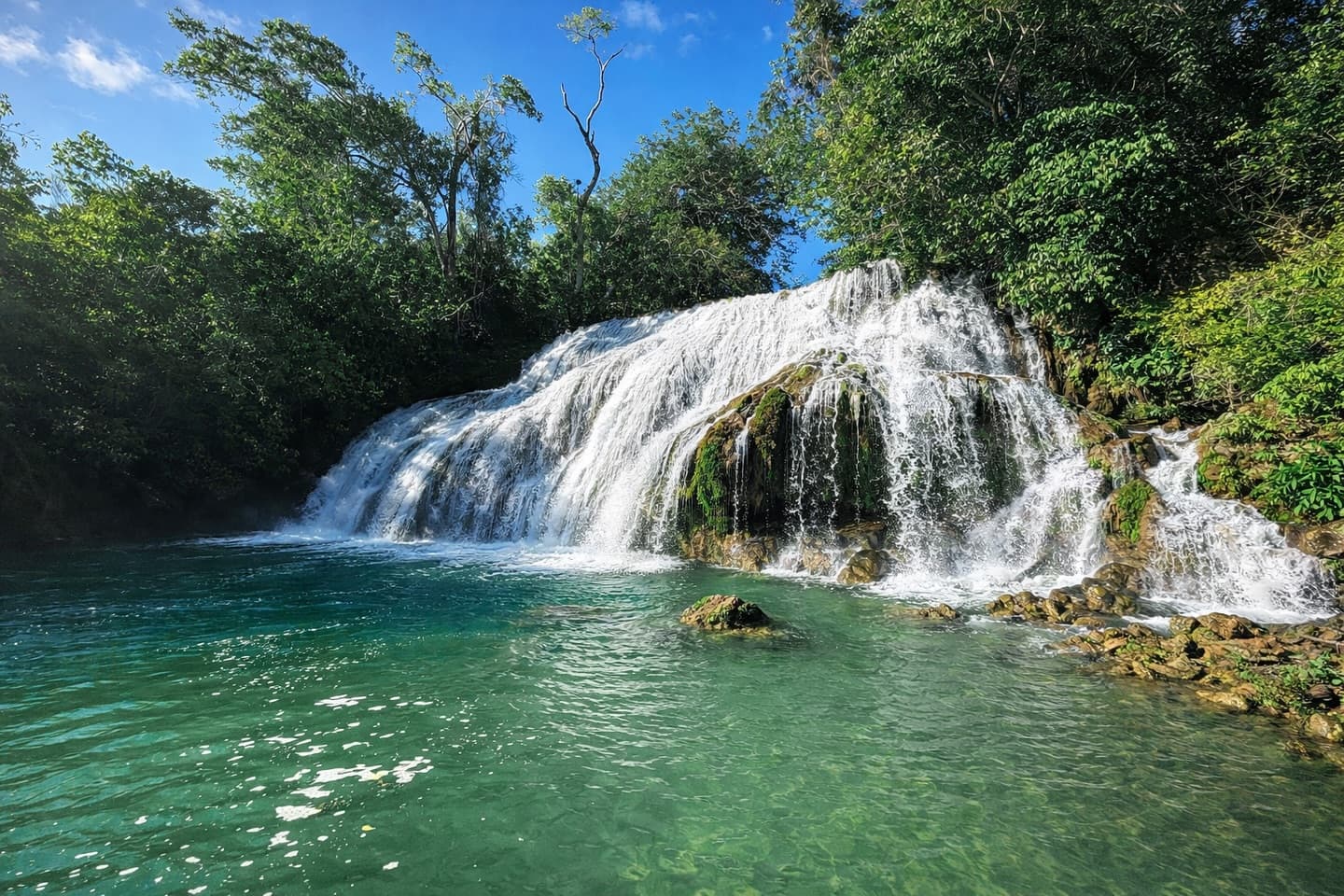
The Boca da Onça Waterfall, with its 156-meter drop, imposes a different scale. The name comes from a rock formation that, seen from a certain angle, resembles a jaguar’s snout. The trail descends the Salobra River canyon and gradually reveals smaller waterfalls, natural pools, and walls covered in vegetation. The volume of water and the height of the fall contrast with the transparency of the calmer stretches. It is the same system—the same geology—expressing itself in different ways.
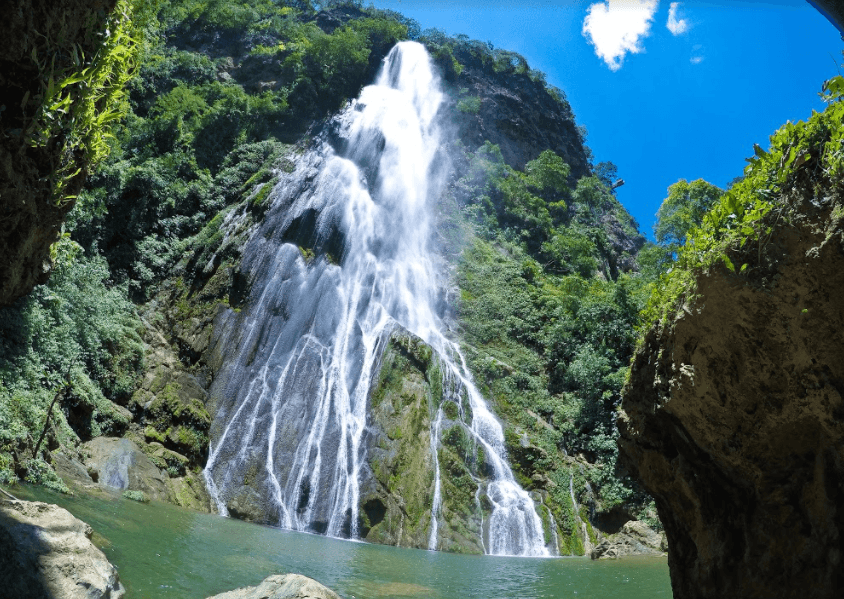
Later, when leaving the water, the skin still carries the river’s temperature. The visual memory remains sharp: the bottom, the fish, the light passing through. In few places in Brazil does water offer itself with such generosity of revelation. Clarity is not just an aesthetic attribute. It is the result of an ancient and ongoing geological process—the slow dissolution of limestone, carbonate precipitation, the natural filtering that still works. The Serra da Bodoquena does not demand heroic effort. It demands attention. It demands the willingness to enter the water and stay long enough for the eyes to adjust to the absence of opacity. What is found there is not the spectacle of wild abundance, but the rarity of preserved purity.
““The Serra da Bodoquena impresses with its clarity: with the real possibility of looking through the water and recognizing, for a moment, what still remains intact beneath the surface.””
Some destinations impress by their force. Others by their inaccessibility. The Serra da Bodoquena impresses by its clarity: by the real possibility of looking through the water and recognizing, for a moment, what still remains intact beneath the surface. [Image 5 — closing] Suggestion: Contemplative and open image. It can be the river at late afternoon with low light crossing the water, the empty shore after floating, or a detail of the rocky riverbed seen through the surface. Its purpose is to leave the reader with a residual feeling of purity and quiet.
Related tours
Explore the tours in this story
Next Story
The Measure of Things
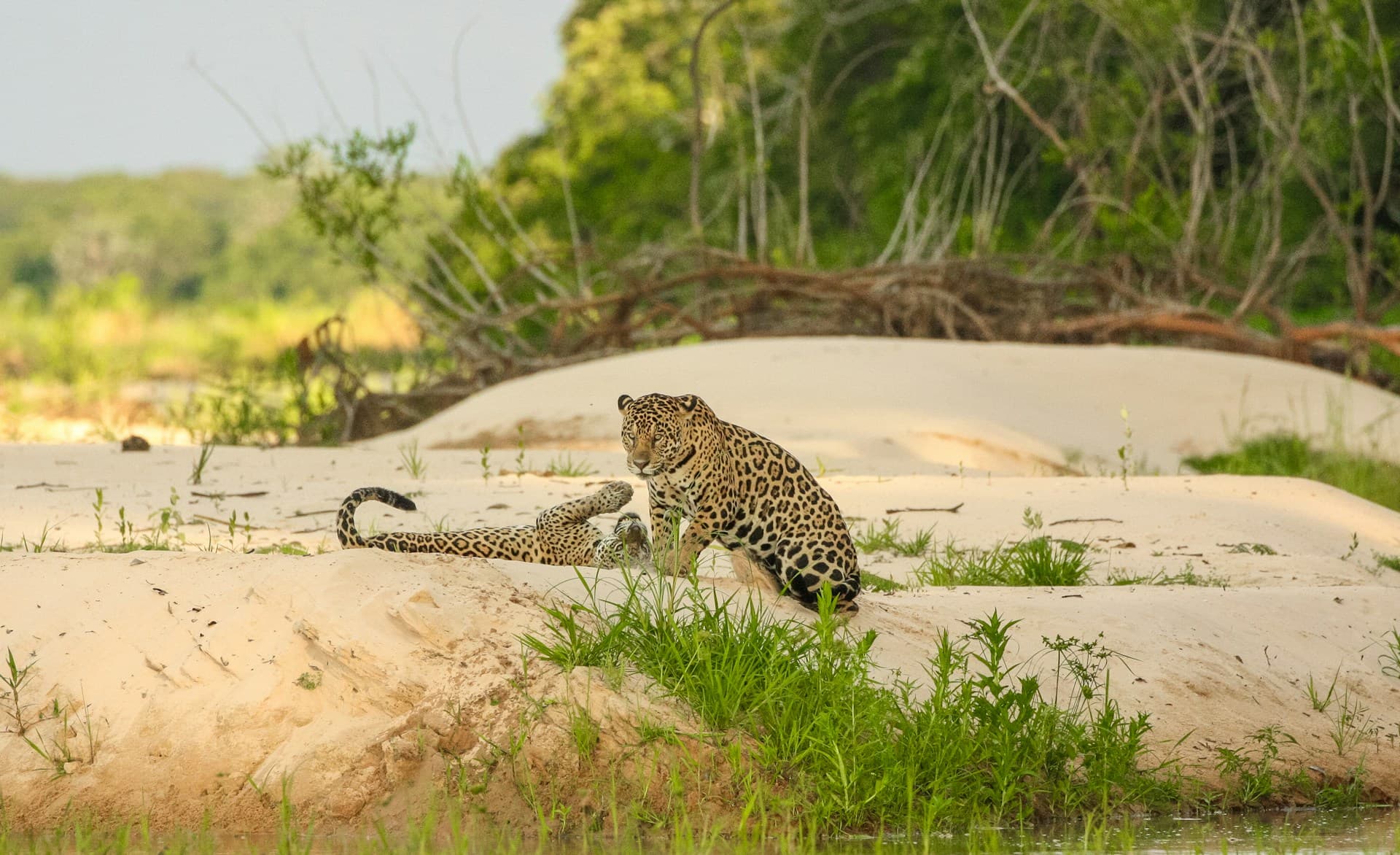
In the North Pantanal, between the Cuiabá River and the Encontro das Águas Park, the jaguar doesn't appear as a rare sighting. It completes a landscape still unfolding in its full scale. An editorial about closeness, silence, and the real possibility of looking at a great predator and feeling that the world still fits in that moment.